CEO Succession Plans: Do You Have One?
 The business and political landscapes are absolutely littered with SUBAR* succession transitions. It’s honestly hard to pick just one cautionary tale.
Disney is a classic example (and will likely pull the trigger again soon). The Biden handoff was a mess. Sam Altman’s brief exile—and miraculous resurrection—at OpenAI was chef’s kiss. Intel. Boeing. And I’ve seen plenty of private-company disasters up close and personal that I won’t name because I enjoy sleeping at night.
These succession failures usually happen for three reasons.
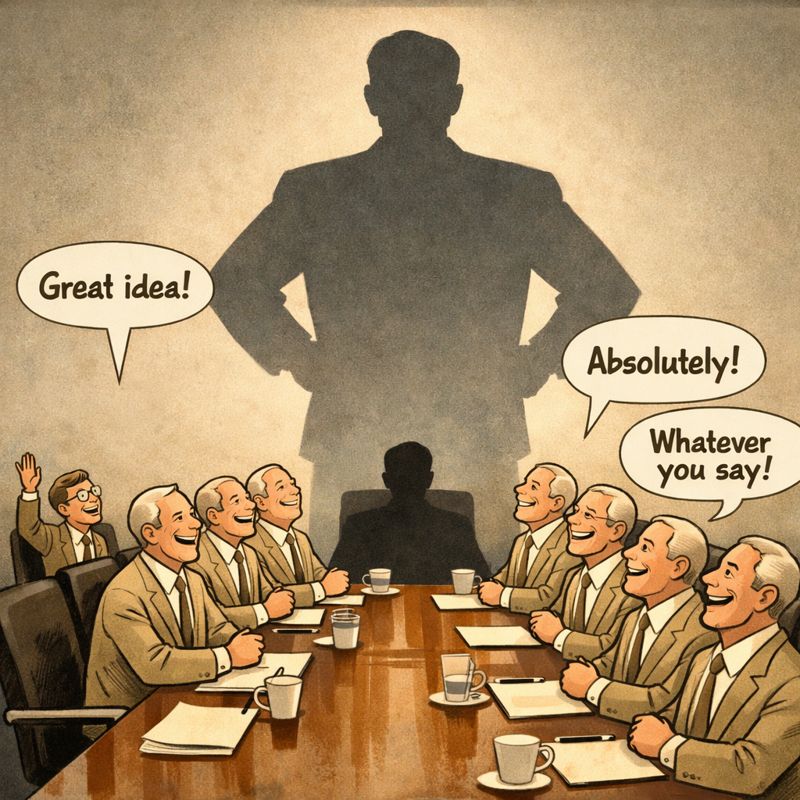
First, a milquetoast board that refuses to have hard conversations. Second, an overly powerful CEO (often enabled by reason #1) who controls the process. Third, a complete lack of process, which—surprise—is also the board’s fault.
CEOs rarely spend quality time thinking about their own retirement or eventual demise. And unless they’re the majority owner, that’s pretty understandable. They didn’t get to the corner office by being a wallflower. Still, it’s tough to recognize—let alone admit—that while you were once gold, time and gravity may have quietly turned you into tin foil.
That’s exactly why the board has to lead. Not “support.” Not “collaborate.” Lead. And definitely not let the CEO run roughshod over succession planning.
Controlling CEOs (some of whom are genuinely effective) who insist on picking their own successor—and then stick around as board chair offering daily guidance—are like your rich uncle who writes his will in a way that detonates the family. If this is you, even if you have controlling ownership, stop breathing your own exhaust. Get some unbiased help. Ideally, you already have it.
And if you’re surrounded by a gaggle of Trump-like sycophants telling you you’re indispensable? That’s on you.
Boards: if you’ve allowed this behavior, say your piece anyway—even if it gets you thrown out. A clean conscience ages better than stock options.
Finally, let’s talk about process. One of my favorite words. (Tariffs don’t make the list.)
I’m tempted to outline what good succession process looks like, but here’s the irony: you can ask ChatGPT for one and it will give you a perfectly serviceable answer. I just did. It was very good.
So let’s end simply.
A good succession process is planned, aligned, developmental, disciplined, and well-communicated.
A bad succession process is last-minute, political, rushed, poorly communicated, and personality-driven.
So—what succession process do you have in place at your company?
Is it written down?
And who actually owns it?
*The military version is FUBAR, but my wife says I can’t use the “F” word.

coaches CEOs to higher levels of success. He is a former CEO and has led teams as large as 7,000 people. Todd is the author of, Never Kick a Cow Chip On A Hot Day: Real Lessons for Real CEOs and Those Who Want To Be (Morgan James Publishing).
Connect with Todd on LinkedIn, Twitter, call 303-527-0417 or email [email protected].


